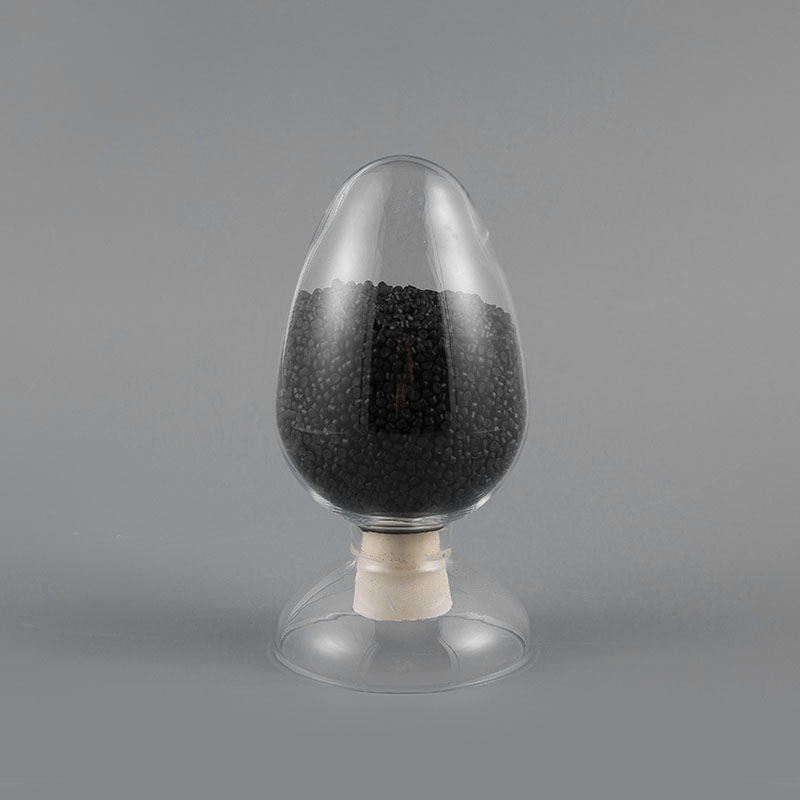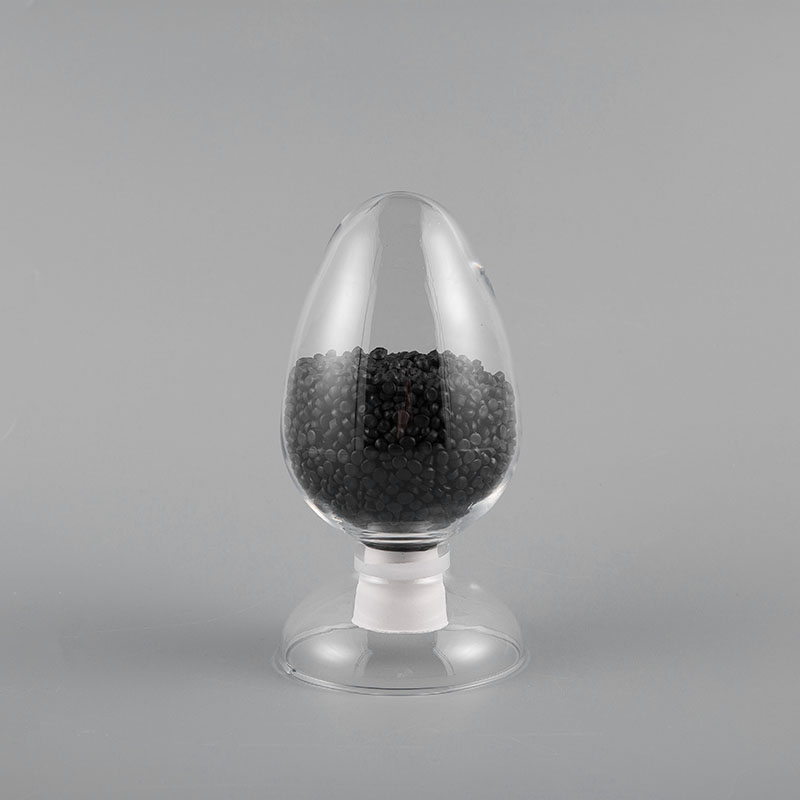
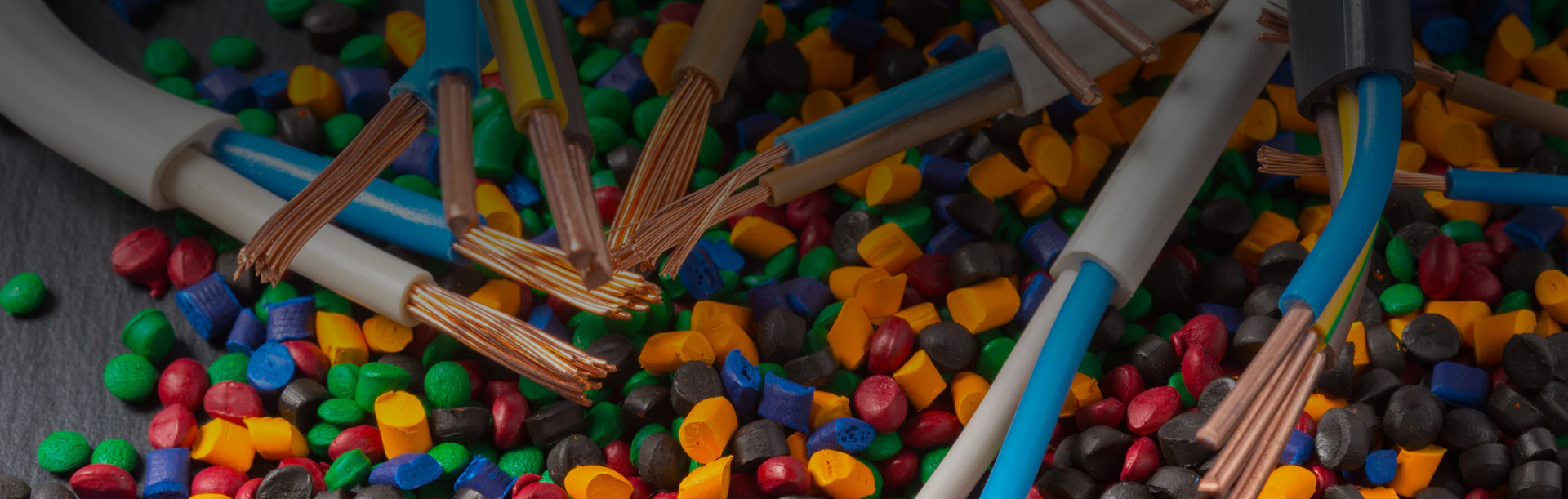
Selecting the right PE compounds for communication cables determines whether a network installation lasts 10 years or 40. Polyethylene compounds are the industry standard for cable jacketing and insulation — but not every grade performs equally under thermal stress, UV exposure, or high-frequency signal demands. This guide answers the four questions cable engineers ask most: which grade to choose, how to verify quality, which properties matter most, and which formulation resists outdoor degradation best.
The answer depends on the cable's deployment environment and signal requirements. Three grades dominate the communication cable market:
Preferred for duct conduit, buried direct, and fiber optic jacket applications. Tensile strength of 20–37 MPa and a density above 0.94 g/cm³ give HDPE excellent crush resistance and moisture barrier performance.
The balance point for drop cables and distribution networks. Stress-crack resistance is significantly higher than HDPE, making MDPE the go-to grade where cables bend around corners or through tight pathways.
Used for flexible data cables and indoor patch cord jackets. Elongation at break exceeds 600% in quality formulations, enabling the tight bending radii that structured cabling installations demand.
For aerial self-supporting cables (ADSS or figure-8 designs), carbon-black-loaded HDPE remains the specification default — offering both structural rigidity and UV protection in a single compound layer.
Quality verification of PE cable compounds requires a structured battery of tests covering physical, electrical, and environmental performance. Relying on a single test result is insufficient — cable failures in the field almost always trace back to untested stress combinations.
| Test Method | Standard | Acceptable Threshold |
| Tensile Strength | IEC 60811-501 | Above 12.5 MPa |
| Elongation at Break | IEC 60811-501 | Above 300% (HDPE); 500%+ (LLDPE) |
| Hot Set (XLPE grades) | IEC 60811-507 | Elongation under load below 175% |
| Volume Resistivity | IEC 60093 | Above 1 x 10^14 ohm-cm |
| Dielectric Constant | IEC 60250 | Below 2.4 at 1 MHz (signal-grade) |
| ESCR (Stress Crack) | ASTM D1693 | F50 above 500 hours |
| UV Aging (carbon black) | IEC 62821-1 | Retention above 80% after 1,000 h |
Melt flow index (MFI) testing per ISO 1133 is the fastest shop-floor check for batch consistency. A deviation of more than 20% from the nominal MFI signals compounding variation that warrants full retesting before extrusion.
Four material properties separate a premium PE cable compound from a commodity grade — and each directly maps to a real-world failure mode that cable operators encounter.
ESCR measures how PE behaves when mechanical stress and chemical exposure combine — the exact conditions inside cable ducts carrying cleaning agents or cutting oils. Low-ESCR compounds crack within weeks; high-ESCR HDPE grades rated at F50 above 1,000 hours remain intact for decades.
For high-frequency data cables carrying signals above 500 MHz, a dielectric constant below 2.35 is critical. Foamed PE compounds achieve values as low as 1.5 by replacing polymer mass with air cells, cutting signal attenuation by up to 30% versus solid PE jackets.
OIT testing per ASTM D3895 measures the antioxidant reserve in a PE compound. Cable compounds with OIT values above 20 minutes at 200 degrees Celsius retain mechanical integrity when cables run near heat sources or through sun-exposed conduit runs.
Cables installed on bridges, wind turbines, or trailing applications experience millions of flex cycles over their service life. High-fatigue PE compounds using metallocene-catalyzed LLDPE maintain elongation retention above 85% after 500,000 bend cycles, versus 60% for standard grades.
Carbon-black-stabilized HDPE is the industry benchmark for UV resistance in outdoor cable applications. At a loading of 2.0–2.5% carbon black by weight — per IEC 60811-409 specifications — this formulation blocks over 99% of UV radiation and has demonstrated 25-year outdoor weathering performance in tropical climates.
For installations in equatorial regions, high-altitude sites (elevated UV index), or cables with south-facing aerial spans, carbon-black HDPE is the only compound type with documented multi-decade UV durability. Hindered amine light stabilizer (HALS) formulations offer color flexibility but require higher additive loadings — typically 0.5–1.0% by weight — to approach comparable outdoor performance ratings. When long-term aerial or direct-burial performance is non-negotiable, specifying PE compounds for communication cables with verified carbon black dispersion per IEC 60811-409 is the lowest-risk approach.
Uimh. 259 Sráid Xingyu, Ceantar Lin'an, Cathair Hangzhou, Cúige Zhejiang
+86-0571-63763088
TEAGMHÁIL LINN Tionscadal cruthaitheach? Bíodh caint táirgiúil againn.
Cóipcheart © Hangzhou Meilin New Materials Technology Co., Ltd. Gach ceart ar cosaint. Déantóirí Ábhair Sreanga Leictreach Agus Cábla Saincheaptha3